Thursday, March 1, 2012

Winter Waterfowl of Ocean City Inlet

The Maryland Ornithological Society's annual conference was held last weekend in Ocean City, Maryland.  It was a fabulous time with many great birds observed.  On Sunday I spent three hours at the Ocean City Inlet helping birders see some of the inlet's specialties like Harlequin Duck and Common Eider.  I thought it would be fun to do some data mining and present a post on what waterfowl birders can expect to see on a trip to the inlet.  I also want to show some of the rarer species that might be observed.


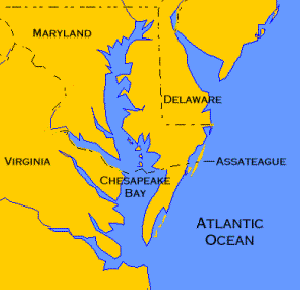
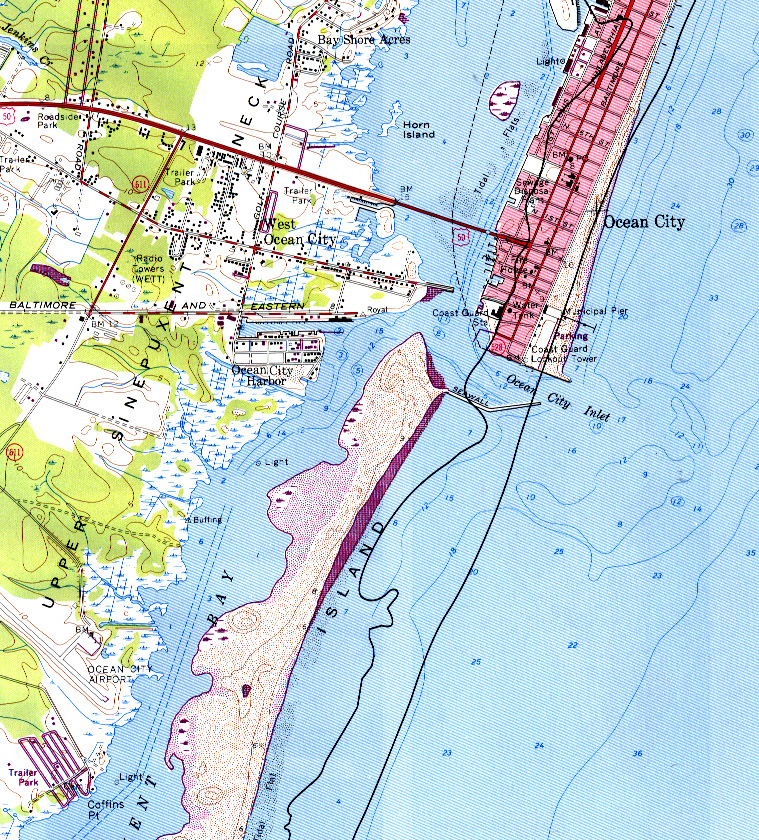
The above map represents the Ocean City, Maryland area.  The inlet can be observed separating Ocean City to the north from Assateague Island to the south.  Sinepuxent Bay meets the inlet at its north end and Assawoman Bay meets the inlet at its south end. 

For purposes of the post I am going to organize the waterfowl into four categories: Common, Uncommon, Rare, and Less than five records. Below is a brief description of what each category means.


Common -- Expected to be seen on a winter trip to the inlet
Uncommon -- Not to be expected but should be observed at least once if a few trips are taken over the winter
Rare -- Not observed every year at the inlet
Less than five records -- There are only a five or fewer records ever from the inlet

Most of my data mining was gleaned from ebird.  Ebird is a Cornell University database where anyone can post their bird sightings.  The data entered is then used in many ways to further our knowledge of birds and their movements.  While the data on ebird isn't a complete representation of a certain species presence or scarcity, it does give a good view of the overall trend of where species can be expected.  


The data shows that there have been 29 species of waterfowl observed at Ocean City Inlet.

COMMON

Atlantic Brant -- During the winter season Brant flocks can often be observed at the inlet.  They are usually seen feeding along the rocks of the jetties.


American Black Duck -- This is the only dabbler other than Mallard that is common in the inlet.  Like Brant, American Black Ducks can often be observed feeding along the jetties.


Mallard -- Mallards, although not as common as American Black Duck, can usually be observed at the inlet. They are normally viewed around the south jetty or flying down the bay.


Bufflehead -- Bufflehead are often viewed feeding in the inlet.
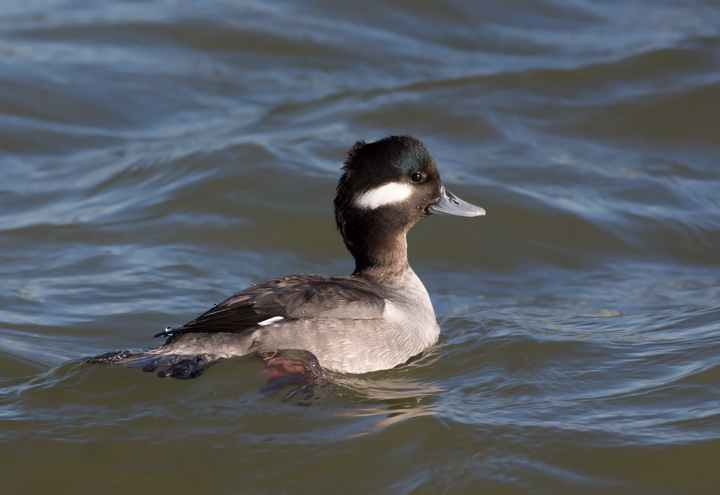

Black Scoter -- Although not as common as Surf Scoters, Black Scoters can be observed feeding at the mouth of the inlet.  Often there is a large mixed flock of scoters at the inlet that contain all three scoter species.  If a little time is spent watching the ocean, scoter flocks can be observed flying off the coast.  Black Scoters, with the diagnostic head shape can often be picked out of these flying flocks.


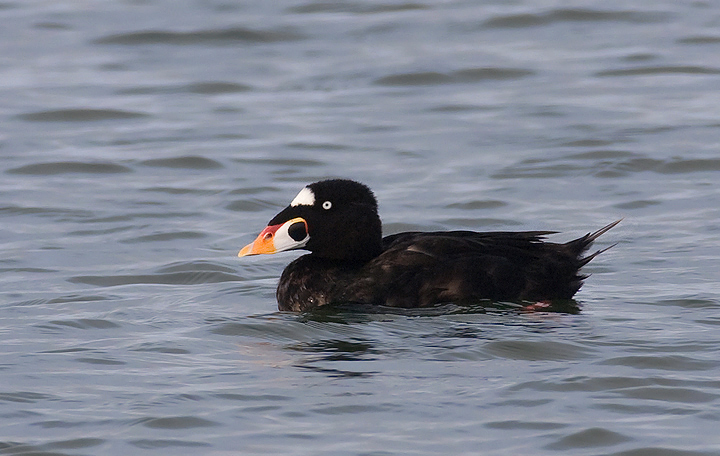
Surf Scoter -- Surf Scoters are very common at the inlet.  Flocks of these beautiful birds can be seen feeding and flying off the coast.

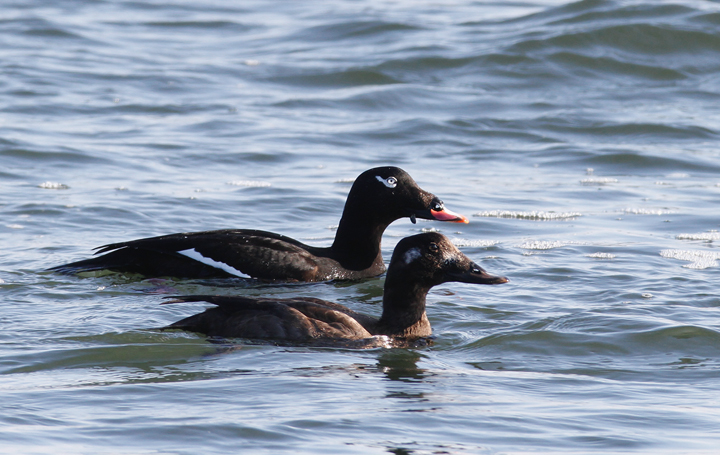
White-winged Scoter -- Of the three scoter species, White-winged Scoter is the most uncommon, although a few individuals are usually present at the inlet.  When observing scoter flocks flying over the ocean look for the birds with white in the wing.  This is an easy identification point since both Black and Surf Scoter wings are black.


Red-breasted Merganser -- Red-breasted Merganser is the only expected merganser at the inlet.  These birds become very common towards the end of winter and spring migration (February/March).


Long-tailed Duck -- A Long-tailed Duck flock is often present at the mouth of the inlet.

    Photo: Andrew Reding

UNCOMMON

Canada Goose -- Canada Geese are uncommon at the inlet.  Usually sightings are recorded as flocks flying down the bay instead of out on the ocean.


Greater Scaup -- Greater Scaup are normally only viewed at the inlet during migration while flocks of scaup are flying off the coast.  Both Lesser and Greater Scaup can be very common on Sinepuxent and Assawoman Bays.
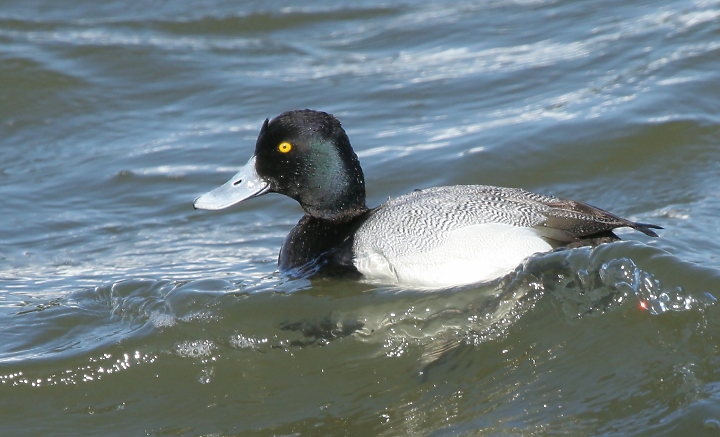

Lesser Scaup -- Like Greater Scaup, birders don't usually see scaup on the water in the inlet.  Usually scaup are observed in flocks flying off the coast.  Just off the inlet in the coastal bays both scaup species can be very common.


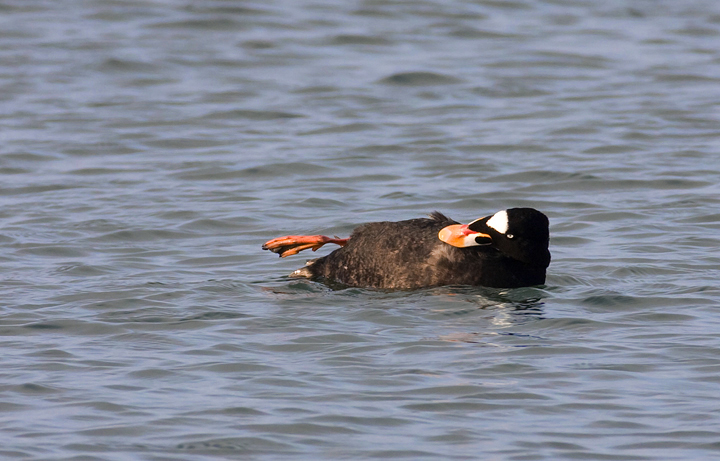
Harlequin Duck -- Harlequin Ducks are one of the specialty birds at Ocean City Inlet.  Harlequins are almost annual but they can be surprisingly difficult to observe.


Common Eider -- Another inlet specialty. Common Eiders have increased in numbers in recent years.  On January 23, 2010 Hans Holbrook counted an amazing 86 Common Eiders.  Counts in the 20s and 30s are not unusual. 


RARE

Tundra Swan -- In ebird there are only ten sightings of Tundra Swan at Ocean City Inlet from 1968 to 2011.  At least three of these sightings were flocks migrating over the ocean and five of the ten sightings were recorded in November.  The high count goes to Bill Hubick and friends who viewed a flock of 35 flying north of the ocean on November 11, 2011.


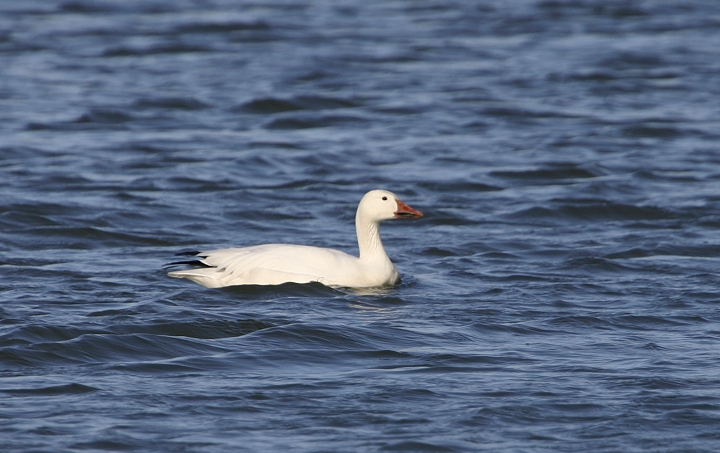
Snow Goose -- When viewed at the inlet most Snow Geese are observed in flocks flying to the west over the mainland.  There are only 12 sightings for Snow Geese in ebird recorded from the inlet.  On January 18, 2010 Jim Stasz and friends saw 10,000 Snow Geese!

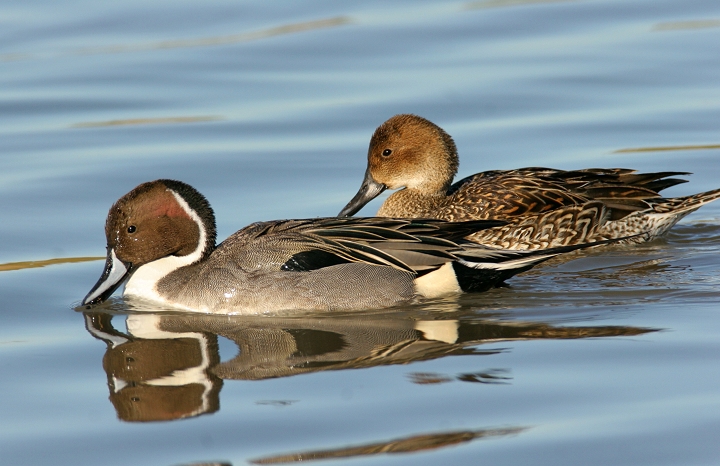
Northern Pintail -- The majority of the 12 records are from February and March when Pintails migrate north.  The high count belongs to Mary Gustafson who observed a flock of 100 birds on February 27,1994.

American Wigeon -- The ten records in ebird range from early November through the end of February, with no real visible trend.  The high count was on November 7, 2009 when Bill Hubick and friends observed five birds flying south over the ocean with eight American Black Ducks and a Blue-winged Teal.


Common Goldeneye -- Common Goldeneye are notoriously difficult to find in the Ocean City area.  It is not surprising to note that there are only ten records from the inlet.  All of these records are single birds.  Since 2000 there has only been six records.
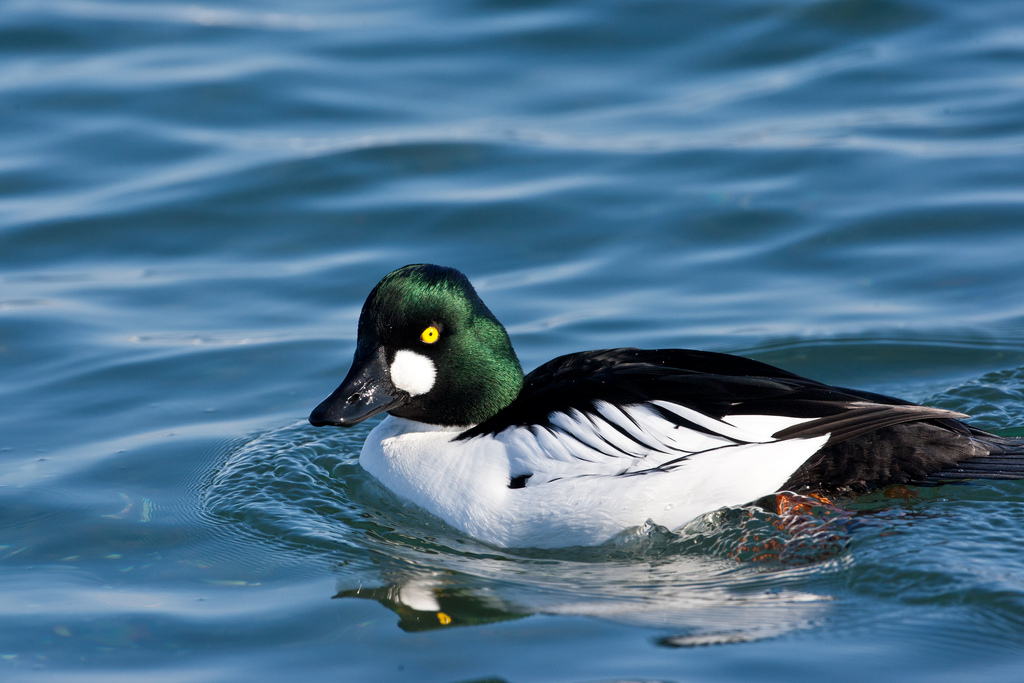
    Photo: US Fish and Wildlife


King Eider -- King Eiders may be common one year and absent the next.  The winter of 2008/2009 was the last season when King Eiders were viewed with any regularity at the inlet, although there were scattered reports from 2010 and 2011.  On February 7, 1998 Sam Dyke recorded 10 birds at the inlet.

    Photo: Martha de Jong-Lantink

Hooded Merganser -- Most of the 13 records in ebird are from the end of December through February.  Kathy Braeuninger recorded 10 birds on February 18, 2007.


LESS THAN 5 RECORDS

Mute Swan -- Mute Swans are extremely rare in the Ocean City area.  There is only one record from the inlet when Rob Ostrowski and friends observed one bird on February 6, 2011.


Wood Duck -- There are three records from the inlet.  All of the sightings were during migration.  Two observations were made in November and one from the end of February.  On November 29, 2009 Bill Hubick and friends observed two birds in flight.


Green-winged Teal -- There are 4 records in ebird for Green-winged Teal from the inlet.  On November 7, 2009 Bill Hubick and friends observed 93 birds flying south over the ocean.  In his checklist notes Bill writes that there were many small flocks flying south.
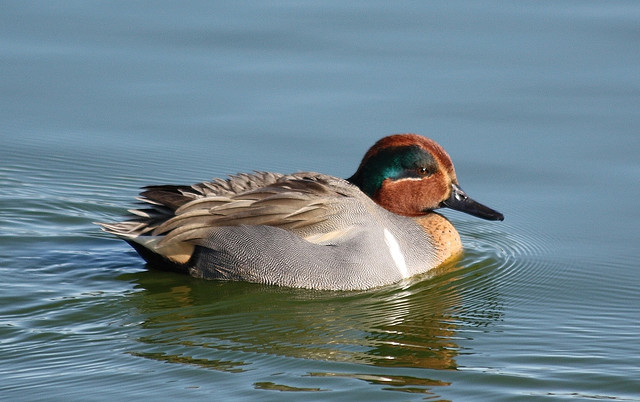
    Photo: Jason Crotty

Northern Shoveler -- There are five records for Northern Shoveler from the inlet.  On January 22, 2003 Sam Dyke observed four birds.


Blue-winged Teal -- There is one record for Blue-winged Teal in ebird from the inlet.  Bill Hubick and friends saw one bird flying south with a flock of eight American Black Ducks and five American Wigeon on November 7, 2009.


Canvasback -- There are five records for Canvasback from the inlet on ebird.  It is interesting to note that when looking at a map of Canvasback records on ebird, there are surprisingly few along the coast.  There are the stand outs where flocks are known to winter like Silver Lake in Rehobeth, Delaware and West Ocean City Pond in Maryland but south of Ocean City they become very scarce.  
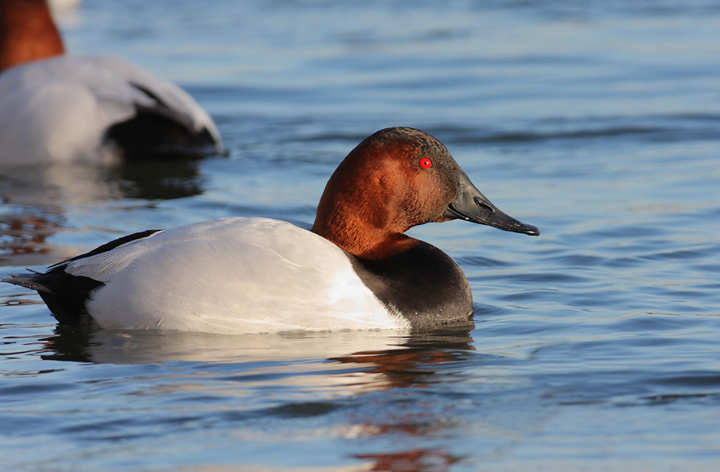

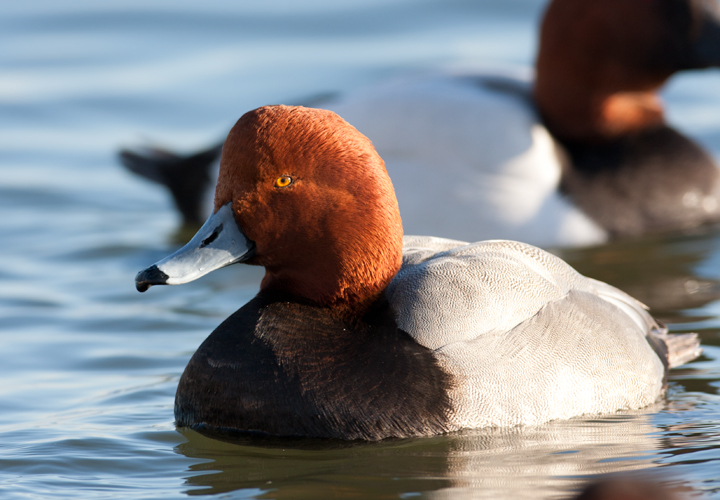
Redhead -- There are 5 records for Redhead at the inlet in ebird.  On November 27, 1994 MaryAnn Todd saw eight Redhead at the inlet.

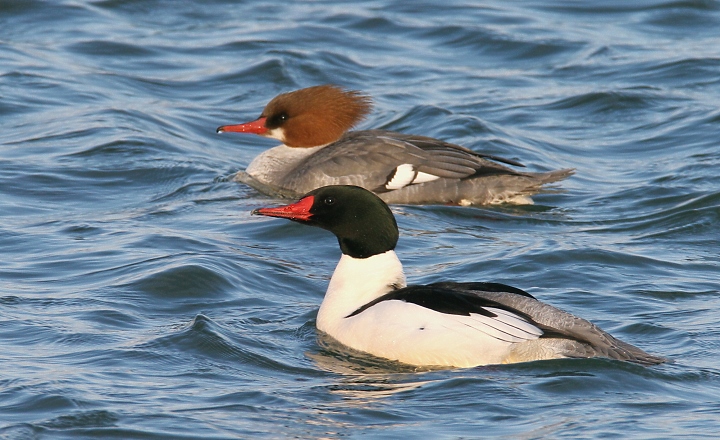
Common Merganser -- There is only one record of Common Merganser from the inlet in ebird.  Jim Stasz recorded one bird on December 28, 2010.  Common Mergansers are extremely rare along the coast.  

I would like to thank Bill Hubick who supplied all but four of the wonderful photographs.  Bill also gave valuable input into the category placement for each of the waterfowl species.  I like one of the statements Bill sent me in an email,  

"Fall dabbler migration is similar to other East Coast seawatching areas, with small flocks readily detected over both the ocean and inland side of the barrier islands. Flocks are often mixed, and nearly any Maryland species can fall in with the abundant flocks of scoters. Like other sites along the coast, Green-winged Teal appears to be most common, but Northern Pintail, American Wigeon, American Black Duck, Mallard, and Wood Duck also deserve mention."

With more observation during migration, I'm sure the records for most of these species would increase greatly. 

I would like to place emphasis once again that all my data was taken from ebird.  For sure, there have been more records for every one of the species above and each species placement is purely my opinion.  I encourage everyone who doesn't use ebird to give it a try.  It is very easy to use and you don't have to be a birder to enjoy using this tool.  Most of the waterfowl mentioned above can be identified by the casual observer, so why not try a little citizen science and give ebird a try.  Take your kids out and look for ducks, write down what you see, then go home and together enter your sightings into ebird.  It will be fun.  I promise.

To check out ebird go to -- www.ebird.org

Thanks again to Bill Hubick for allowing me to use his photographs.  A few of the above photos were gleaned from Flicker Creative Commons.  

Bill Hubick -- www. billhubick.com
Andrew Reding -- http://www.flickr.com/photos/seaotter/
Martha de Jong-Lantick -- http://www.flickr.com/photos/marthaenpiet/ 
Martha's Flickr site is amazing.  I encourage everyone to go and check out her photos.
Jason Crotty -- http://www.flickr.com/photos/46789814@N05/


Wednesday, February 22, 2012

Winners and Answers to the Assateague Island Biodiversity Quiz

I would like to congratulate the top three winners of the Assateague Island Biodiversity Quiz.  1st place is a tie between Marshall Iliff and Matt Hafner who scored a whopping 38.  2nd place goes to Mikey Lutmerding who scored a close 37.  Well done!

Thanks to everyone who participated. Here are the answers to the Assateague Biogeography quiz, many of which might be surprising!


1. Tufted Titmouse - Rare/Absent
One of a suite of woodland residents that is very rare on the island: Tufted Titmouse, White-breasted Nuthatch, Hairy Woodpecker, Pileated Woodpecker, and Red-shouldered Hawk.
Consider the differences in habitat, including food sources, cover, and of course nesting challenges.


2. Spring Peeper - Absent
Not recorded on Maryland's barrier islands.

3. Downy Woodpecker - Regular
Common resident.

4. Eastern Gray Squirrel - Rare/Absent
We know of just one sight record in recent history, but perhaps there is a pocket somewhere remote on the island.

5. Eastern Cottontail - Regular. Common.

6. White-tailed Deer - Regular. Common.

7. Pileated Woodpecker - Rare/Absent
One of a suite of woodland residents that is very rare on the island: Tufted
Titmouse, White-breasted Nuthatch, Hairy Woodpecker, Pileated
Woodpecker, and Red-shouldered Hawk.


8. Red Fox - Regular. Common. Predator of endangered beach nesting species.

9. Yellow Warbler - Regular. Common breeder.


10. Yellow-throated Vireo - Rare
Very rarely detected migrant on the island. Many serious Worcester birders lack records. The odd migrant sneaks through in May and September.

11. Bobolink - Regular
A regular spring migrant and fall migrant. Occasionally abundant, especially when hundreds of *bink* calls are detected overhead in nocturnal migration.


12. Rough Green Snake - Regular. An impressive pioneer of island habitats.


13. Cliff Swallow - Rare
A very local breeder on the Eastern Shore and a very rare migrant on the coast.

14. American Toad - Absent
Absent from the barrier islands. Fowler's Toads are abundant, supporting a population of toad-loving Eastern Hog-nosed Snakes.


15. Eastern Chipmunk - Absent
Very local on the Eastern Shore, favoring woodlands like Tuckahoe and Millington.

       
16. Northern Saw-whet Owl - Regular
Regular migrant and wintering species.


17. Hairy Woodpecker - Rare/Absent
One of a suite of woodland residents that is very rare on the island: Tufted
Titmouse, White-breasted Nuthatch, Hairy Woodpecker, Pileated
Woodpecker, and Red-shouldered Hawk.


18. Cape May Warbler - Regular
Uncommon spring migrant and common fall migrant. Occasional major fall flights, especially in October.


19. Carolina Wren - Regular. Common resident.


20. House Wren - Regular
Common migrant and breeder. Often lingers into winter in small numbers

21. White-breasted Nuthatch - Rare
A very rare migrant on the island and in Ocean City.One of a suite of woodland residents that is very rare on the island.


22. Eastern Box Turtle - Regular
Jim Brighton and I have about 5 records for Assateague between us.

23. Cooper's Hawk - Regular

24. Red-shouldered Hawk - Rare migrant/wintering species. Records concentrated in January/February, it seems.

25. Merlin - Regular
Common migrant and wintering species here.

26. Mute Swan - Rare
Only a handful of reports for the county in the last few years. Very unpredictable appearances and many serious Worcester birders need it.

27. Red-breasted Merganser - Regular
Very common migrant/wintering species.


28. Red-backed Salamander - Absent
Absent from the Maryland barrier islands.

29. Wood Turtle - Absent
Nearly absent from the Eastern Shore of Maryland.

30. Common Merganser - Rare
Local on the Eastern Shore, mostly on the upper Eastern Shore and Blackwater area. Rare anywhere in Worcester and especially so on the immediate coast.


31. Surf Scoter - Regular
Common to abundant migrant and wintering species.


32. Eastern Screech-Owl - Rare
Common in coastal Worcester, but very rarely encountered on the island.

33. Louisiana Waterthrush - Rare
Very rarely detected as a migrant anywhere in Maryland, really, but especially rare on the immediate coast. Jim, John Hubbell and I had our one migrant on the island was 8/9/2009.
Perhaps more effort at the very first stirrings of "fall" migration would result in a few more records.

34. Eastern Kingbird - Regular
Common migrant and breeder. Vast majority gone by October.


35. Chipping Sparrow - Regular. Common.

36. American Tree Sparrow - Rare
Uncommon on the Coastal Plain and rarer as you head east and south on the Eastern Shore. Very rare winter visitor to the island. A mini-irruption in February 2010 provided some rare records, most of our county birds.


37. Pine Warbler - Regular

38. Delmarva Fox Squirrel - Rare/Absent
We personally know of no recent records in the Maryland section of the island, but present on the Virginia side. Possibly present in remote patches.


39. Painted Bunting - Rare
One record?  9/5/2003

40. Eastern Whip-poor-will - Rare
Or at least very difficult to detect!  Chuck-will's-widow is common.

I would like to thank Bill Hubick for creating a great post and supplying the wonderful photographs.  More of Bill's photography can be viewed at www.billhubick.com. Once again, both Bill and I would like to thank everyone who participated.

Thursday, February 16, 2012

Assateague Island Biogeography Quiz


We have a couple firsts at Mid Atlantic Nature; our first guest post and our first quiz. Bill Hubick has written a great piece on Assateague Island and ends the post with a quiz. We encourage everyone to participate. I'll post the answers and the top three winners Monday evening.

One of the true joys of nature study is becoming more intimately familiar with a place. Tuning into the subtle seasonal differences between local and regional patches might be the most rewarding aspect of being a naturalist. In addition to tapping into an endless source of fascination, you significantly increase the options for exciting finds on a given day. If you visit Assateague on a cold November morning and aren't excited about a Blue-gray Gnatcatcher or an American Redstart, it is a tragedy. You are ignoring the majority of potential rarities and the accompanying fun! The same applies to any other species that are locally or seasonally rare. Allow yourself to be intrigued by that Red-eyed Vireo in your yard in late June that hasn't been there since April. Be excited about a new species for your daily walk into work. I like knowing that Woodchuck (Groundhog) is uncommon and local on the Eastern Shore. I have seen it in 22 of Maryland's 23 counties and my still needing it in Somerset County is not due to a lack of looking. Grasshopper Sparrows seem to be local in the county as well. Are these two facts related? Listing games provide a framework for us to learn. Before month listing and eBird review, I had little reason to know that an April 28th Acadian Flycatcher is totally expected, while an April 21st Acadian Flycatcher should be photographed.

Because of its unique characteristics, Assateague Island is perfect for considering distribution of species. For anyone not already familiar with Assateague, it is a 37-mile barrier island south of Ocean City that lines much of the Maryland coastline south to Virginia.

Although it supports a variety of microhabitats, sandy beaches and dunes dominate the island landscape. Scrubby areas and loblolly pine woods support an impressive diversity of bird life, especially in migration. The island is a natural concentration point, and it is without question the top birding destination in Maryland. It has hosted many of Maryland's most outlandish rarities, including American Flamingo, Rock Wren, Sage Thrasher, and Smith's Longspur. It is most famous for its population of feral horses.

Photo: Bill Hubick
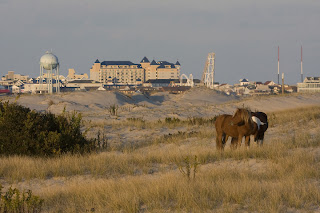
Ocean City as viewed from the north end of Assateague Island.

For this quiz, try to sort the following 40 species (birds, mammals, and reptile/amphibians) into two columns, "Rare/Absent" or "Regular." As long as a species is seasonally regular, such as migrant Black-throated Blue Warblers or wintering White-throated Sparrows, you should file it as "Regular". The species we are calling "Rare/Absent" have been seen rarely or never by most of us who have visited Assateague compulsively for the last 10 years or so. Species seen in flight over the mainland from Assateague Island do not count. We recommend trying this without resources, as tools like eBird will make the birds rather easy. If you have never visited the island, make educated guesses! Consideration of the general geography and habitat, as well as the natural history of the listed species, will likely lead to many correct answers.
Please send your answers to Jim Brighton (jimbrighton3@gmail.com) and Bill Hubick (bill_hubick@yahoo.com). We'll post the answers next week!
  1. Tufted Titmouse
  2. Spring Peeper
  3. Downy Woodpecker
  4. Eastern Gray Squirrel
  5. Eastern Cottontail
  6. White-tailed Deer
  7. Pileated Woodpecker
  8. Red Fox
  9. Yellow Warbler
  10. Yellow-throated Vireo
  11. Bobolink
  12. Rough Green Snake
  13. Cliff Swallow
  14. American Toad
  15. Eastern Chipmunk
  16. Northern Saw-whet Owl
  17. Hairy Woodpecker
  18. Cape May Warbler
  19. Carolina Wren
  20. House Wren
  21. White-breasted Nuthatch
  22. Eastern Box Turtle
  23. Cooper's Hawk
  24. Red-shouldered Hawk
  25. Merlin
  26. Mute Swan
  27. Red-breasted Merganser
  28. Red-backed Salamander
  29. Wood Turtle
  30. Common Merganser
  31. Surf Scoter
  32. Eastern Screech-Owl
  33. Louisiana Waterthrush
  34. Eastern Kingbird
  35. Chipping Sparrow
  36. American Tree Sparrow
  37. Pine Warbler
  38. Delmarva Fox Squirrel
  39. Painted Bunting
  40. Eastern Whip-poor-will
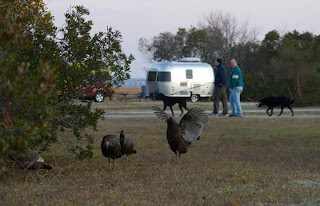
Wildlife populations are dynamic. While the Northern Bobwhite population has crashed on Assateague Island, Wild Turkeys seem to have caught a foothold.

Photo: Bill Hubick
Wild Turkeys on Assateague Island

"That’s how one learns avian status and distribution! Ditto the county-listing (and month-listing) fanatics on the state and provincial level; they are often the ones who know bird distribution in their home state better than anyone. If listing means knowledge, then it’s more than a game."
-- Paul Lehman (Birding, January 2012)

Wednesday, February 8, 2012

Winter and Early Spring Vernal Pool Egg Mass Identification: Pt. 2 Salamanders

Part two of our discussion on winter and early spring vernal pool egg mass identification is going to concentrate on Salamanders. Let's do a quick recap on how to differentiate between frog and salamander egg masses.

Photo: Ronnie Puckett

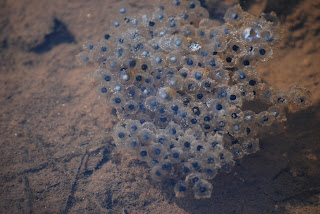
Frog egg masses do not have the protective outer gelatinous layer. The outer edge of the mass is the eggs themselves.

Photo: Richard Bonnett

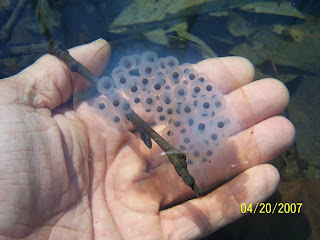
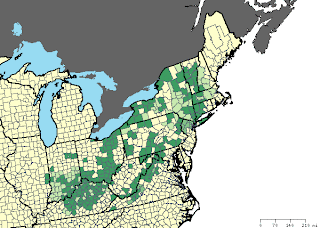
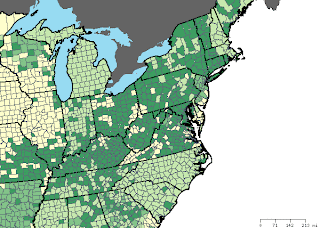
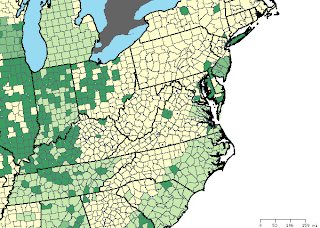
Salamander eggs have an outer gelatinous layer that completely surrounds the egg mass. Once you have determined whether you are looking at frog or salamander eggs you can begin to try to get the egg mass to species. Below I will outline how to identify salamander egg masses that are found in the Mid Atlantic region's vernal pools. I have included maps from the USGS National Amphibian Atlas that show ranges for each species to county level. The color codes are as follows: Dark Green = Museum record, Middle Green = Published record, Light Green = Presumed presence, no green = no known occurrence.

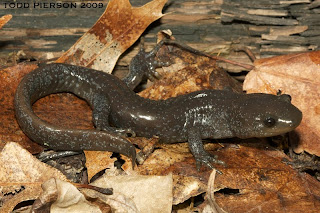
There are three species of salamander that lay large egg masses in our area. All three salamanders belong to the genus Ambystoma. Members of this genus are usually only observed during the mating season because they spend most of their lives underground.

Jefferson Salamander

Photo: Todd Pierson

In the Mid Atlantic region Jefferson Salamanders are found from southern Virginia through New York. Mainly they are found on the piedmont or mountains. There are breeding populations on Long Island, NY which I believe is the only coastal plain population in our region.


Jefferson Salamanders breed from early February through April depending on location. Jefferson Salamander egg masses usually surround small submerged limbs like in the photo below.

Photo: Richard Bonnett

Females usually lay between 10 - 60 eggs per mass. As mentioned above the female will lay her eggs on a submerged stick. On one stick a female may lay more than one mass. As the egg masses age they will swell and merge looking as if it is one large egg mass when in actuality there are many. Jefferson Salamander egg masses are not firm. If you lift a stick with attached Jefferson Salamander eggs they will probably fall off as soon as the stick leaves the water.

Spotted Salamander

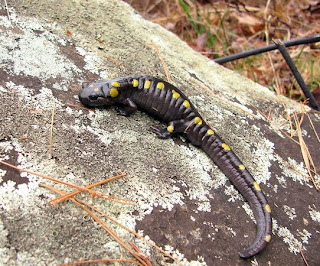
Photo: Jim Brighton

Spotted Salamanders are our most common Ambystoma. They are located throughout the Mid Atlantic region. Uncommon on the coastal plain they become increasingly common through to the mountains.


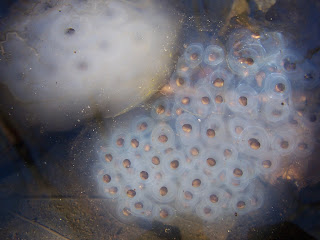
In our region Spotted Salamanders breed from February through March. Like the Jefferson Salamander, Spotted Salamanders usually lay their eggs on submerged sticks. They usually consist of 50 - 250 eggs. Egg masses are normally an oblong rounded shape like in the photo below.

Photo: Richard Bonnett

According to James Petranka in his book Salamanders of the United States and Canada, Spotted Salamander egg masses occur in three color types.

The egg masses of Spotted Salamanders consist of clear, white, and intermediate color morphs depending on the presence of proteins in the outer jelly layers. Local pond populations often lay only clear egg masses; however, masses that are milky white in appearance can make up a high percentage of egg masses in some populations. Intermediate forms are relatively uncommon.

Spotted Salamander egg masses are firm. When taken out of the water they will usually retain their shape unlike the egg masses of Jefferson Salamanders.

Eastern Tiger Salamander

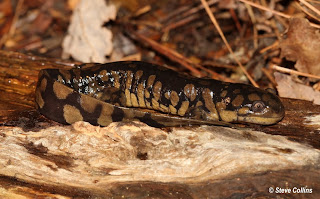
Photo: Steve Collins

Eastern Tiger Salamanders are one of the Mid Atlantic regions rarest salamanders. They are almost completely limited to the coastal plain. Due to habitat destruction and introduction of fish into many of their breeding areas Tiger Salamanders in the east are becoming increasingly rare and are considered endangered in many states.


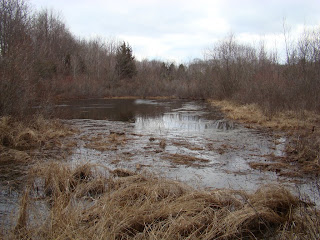
Tiger Salamanders are one of our earliest vernal pool breeders. Breeding can take place as early as November but the end of December and January are the norm. Tiger Salamanders often breed in more grassy open vernal pools. The photo below is an example of a type of vernal pool where Eastern Tigers breed.

Photo: Linda Ruth

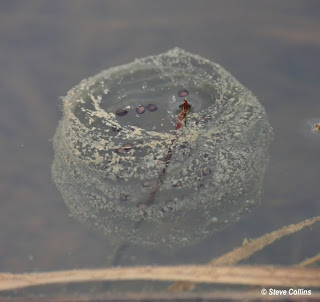
Eastern Tiger Salamander egg masses are smaller than Spotted Salamander masses. The mass usually contains around 50 eggs and is round or oblong in shape. Like the other Ambystoma discussed above, Eastern Tigers lay their eggs on submerged sticks and other debris.

Photo: Steve Collins

Unlike Spotted Salamander egg masses which remain firm, Eastern Tiger Salamander egg masses loose their firmness as they age.

There are other salamanders that lay their eggs in vernal pools like Blue-spotted Salamanders in the north and Mabee's Salamander in the south, but these salamanders lay their eggs singularly and never in large masses like those discussed above. Blue-spotted Salamanders hybridize with Jefferson Salamanders in some areas in the northern part of the Mid Atlantic. The hybrid egg mass looks like a Jefferson Salamander egg mass but there are usually many dud eggs in the mass which turn gray with age.

I would like to thank Steve Collins for helping me out with the Tiger Salamander photos. I would also like to thank the other photographers whose photos were used under the Flickr Creative Commons License.

Steve Collins: http://www.flickr.com/photos/odephoto/
Richard Bonnett: http://www.flickr.com/photos/bonnyboy/
Linda Ruth: http://www.flickr.com/photos/37822476@N04/
Ronnie Puckett: http://www.flickr.com/photos/kodacrome/
Todd Pierson: http://www.flickr.com/photos/twpierson/


The range maps I used are found on the USGS National Amphibian Atlas website.

These are the books I used when doing my research.
White, James & Amy. Amphibians and Reptiles of Delmarva. Centerville: Tidewater Publishers, 2002.
Conant & Collins. Reptiles and Amphibians of Eastern/Central North America. Boston: Houghton Mifflin, 1998.
Martof, Palmer, Bailey, Harrison. Amphibians & Reptiles of the Carolinas & Virginia. Chapel Hill: University of North Carolina Press, 1980.
Petranka, James. Salamanders of the United States and Canada. Washington, D.C.: Smithsonian, 1998.

Amphibiaweb is an amazing website. Hours of fun exploration available!
On the USGS website there is a page that has a field key to amphibian eggs of Minnesota, Wisconsin, and Iowa. Luckily, the Mid Atlantic region shares many of the same species. The key is really easy to use.
On Field Herp Forum there was a post that helped me greatly with this blog post. The photos are awesome and his egg mass descriptions are very clear and concise.