Wednesday, May 16, 2012

How to Identify the White Violets of the Mid Atlantic Region

I have received many requests asking that I continue with the identification of the rest of the violets of the Mid Atlantic.  I had to choose between the nine species of white violet or the 34 species of blue violet.  I chose the easy way out and decided to continue with a post on how to identify the white violets of the Mid Atlantic region.

One of the first identification points to look for when identifying violets is to see whether the plant is stemmed or unstemmed.  Stemmed means that the flower and leaves share the same stem.  Unstemmed means that the flower and leaves have their own individual stems.  Of the nine white violets that grow in our region only two species are stemmed.

Viola canadensis (Canadian White Violet)

Photo: Viola canadensis, Gravitywave

Viola canadensis is a stemmed violet that is very easy to identify.  It is one of the taller violets, ranging in size from 6 -14".  The yellow center of the flower is diagnostic as is the purplish coloration on the back of the top petals.

Photo: Viola canadensis, Jim Brighton

Viola canadensis is absent from the coastal plain but can be found in the piedmont and mountains of all the states in the Mid Atlantic region.  It is endangered in New Jersey.

USDA state map for Viola canadensis

Photo: Viola canadensis, Kent McFarland

Viola striata (Striped Cream Violet)

Viola striata is our other stemmed white violet.  It is easy to identify because the flowers are heavily bearded and do not have yellow centers or purplish backs to the top petals.

Photo: Viola striata, Jim Brighton

Viola striata is very uncommon on the coastal plain and becomes more common in the piedmont and mountains throughout the Mid Atlantic region.

USDA state map of Viola striata

The remaining species of violets are unstemmed.  We will start out with the two toughest species to identify Viola blanda and Viola macloskeyi.  These violets are very similar with only slight differences.

Viola blanda (Sweet White Violet)

Photo: Viola blanda, Stan Lockwood

Viola blanda is a small unstemmed violet that grows in rich woodlands throughout the Mid Atlantic.  The small white flowers typically have the top two petals reflexed and twisted.  

Photo: Viola blanda, Squamatologist

Another important identification point is that the stem of Viola blanda is usually reddish.  The leaves of Viola blanda are cordate.  Cordate means heart-shaped unlike the leaves of Viola macloskeyi which are more ovate to orbicular. Ovate means shaped like an egg and orbicular means very rounded.  

USDA state map for Viola blanda.

Viola blanda can be found sporadically on the coastal plain and becomes more common in the piedmont and mountains throughout the Mid Atlantic.

Viola macloskeyi (Northern White Violet)

As stated above, Viola macloskeyi and Viola blanda are very similar.  Viola macloskeyi is very small, unstemmed, and typically grows in wetter environments than Viola blanda. It is a violet of bog edges and the website Northern Ontario Flora states that this violet especially likes to grow in wet alder thickets.

Photo: Viola macloskeyi, Tom Palmer

Unlike Viola blanda, the stems of Viola macloskeyi are mostly green but they can have red hints.  The upper flower petals of Viola macloskeyi are not twisted but can be reflexed.  The leaves of Viola macloskeyi are more ovate/orbicular than cordate, meaning the leaves are more egg-shaped/circular than heart-shaped.

Photo: Viola macloskeyi, Tom Palmer

Viola macloskeyi is found throughout the Mid Atlantic region.  In North Carolina and Virginia it is restricted to the mountainous regions.  North of the Mason Dixon Line it can be found from the coastal plain through to the mountains.

USDA state map of Viola macloskeyi

Viola renifolia (Kidney-leaved Violet)

Viola renifolia is another small unstemmed violet that is very similar to the previous two species. But, Viola renifolia has one characteristic that sets it apart.  It has hairy leaves. Sometimes only the underside of the leaf is hairy.

Photo: Viola renifolia, Cindy Kilpatrick

In the Mid Atlantic region Viola renifolia is only found in Pennsylvania and New York.  The USDA website lists this violet as extirpated in Pennsylvania, but on the PA Natural Heritage website they list the violet as endangered.

USDA state map for Viola renifolia

Viola lanceolata (Lance-leaved Violet, Bog White Violet)

Photo: Viola lanceolata, Corey Raimond

Viola lanceolata is really easy to identify.  The leaf shape, long and narrow, is a diagnostic feature that easily separates this species from all the other white violets in our region.

Photo: Viola lanceolata, Andy Firk

This plant is always found growing in wet areas such as bogs and ditch edges.  It is most common on the coastal plain, but can also be found in the piedmont and mountains from Virginia north into New England.

USDA state map for Viola lanceolata

Viola x primulifolia (Primrose-leaved Violet)

Photo: Viola x primulifolia, Anita363

The Primrosed-leaved Violet is a common hybrid of Viola lanceolata x Viola macloskeyi.  It is often found in the same habitats as Viola lanceolata.  The distinguishing characteristic of the hybrid are the shape of the leaves.  The leaves are always longer than wide and typically narrowly egg-shaped with a wedge-shaped (cuneate) base.  This leaf shape is diagnostic and will easily differentiate this hybrid from the other white violets.

Photo: Viola x primulifolia, Patrick Coin

Viola x primulifolia is found throughout the Mid Atlantic from the coastal plain to the mountains.

USDA state map of Viola x primulifolia

The last two species of violets are typically not white but have white forms that are occasionally found.

Viola sororia abliflora (White form of Common Blue Violet)

Photo: Viola sororia albiflora, Frank Mayfield

The white form of the Common Blue Violet is occasionally found among the more common blue forms of the flower.  This violet can easily be differentiated from all the other white violet by looking at the small spur in back of the flower (shown in the photo below).

Photo: Viola sororia, Amadej Trnkoczy

As you can see in the photo, the spurs of the violet are reddish green.  The spur is the reddish rounded part of the above flowers.  In all the other white violets the spur is white or whitish yellow.  Viola sororia is found throughout the Mid Atlantic and is one of our most common violets.

USDA state map of Viola sororia

Viola pedata form alba (Bird's-foot Violet)

Viola pedata is another violet that can come in many different colors including pure white.  It is a large violet often found in dry areas where other violets do not typically grow.

Photo: Viola pedata, Peter Gorman

The leaves of this violet easily differentiate it from all the other white violet species.  The leaves are typically divided into four or more lobes and resemble a bird's foot.  This violet is found from North Carolina through to Pennsylvania.  In New York it is very rare with only a few populations.

USDA state map of Viola pedata

I would like to thank all the photographers who made this post possible. Please go to their websites and check out all their cool photos.


The USDA website where I procured the maps for this post can be found here.

The BONAP website was also used to glean geographic information for each of the species in the post.




Tuesday, May 8, 2012

A Birders Guide to Somerset County, MD

Photo: Rumbly Point, Bill Hubick

Maryland's Somerset County is arguably the most under birded county in the state even though it has very high potential for finding rarities.  In the past amazing state birds like Tropical Kingbird and Lazuli Bunting have been found.  For birders looking for out of the way pristine habitats and good birds, Somerset County is the place to go.


Somerset County is located about three hours from the Washington DC/Baltimore corridor on the southwestern side of the Maryland's Eastern Shore.  It has many different habitat types including cypress swamps, massive salt marshes, and the Chesapeake Bay.  Marsh birds are the specialties of Somerset and if you go to the right places birds like Saltmarsh Sparrow and American Bittern can be easy to see.

Photo: American Bittern, Bill Hubick

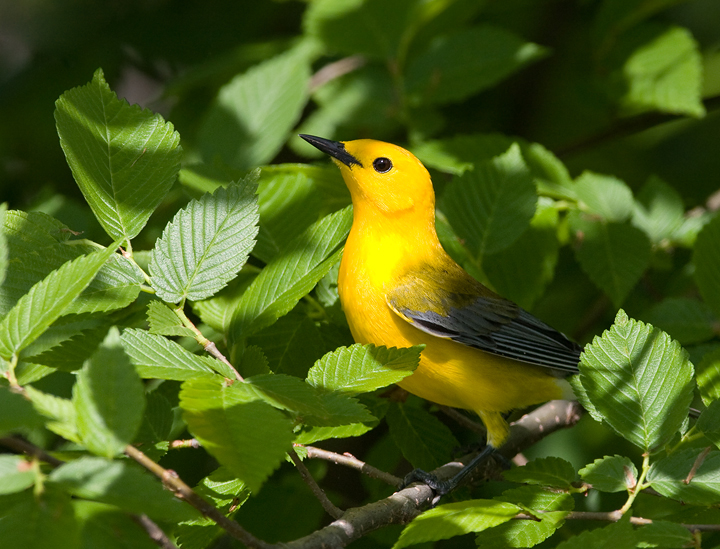
Many birders forget that there is an interior to Somerset County with cypress swamps and large wooded areas that hold many interesting birds like Red-headed Woodpecker and Prothonotary Warbler.  

Photo: Prothonotary Warbler, Bill Hubick

For this post I will provide a google map that has pin points to many of the areas that I bird regularly in the county.  If you click on one of the points a box will pop on the screen that will give a brief description of what birds can be expected at that location.  Obviously, I can't list every spot,  so if you have a special place in Somerset County that I may not know about please name the location and give a description in the comment section at the end of the blog post so other birders can use your intel.

To access my google map to Somerset County birding locations just click the link below.

Somerset County Birding Locations

I would like to thank Bill Hubick for letting me use his photos for this post.  Bill has an amazing website full of outstanding nature photography that can be viewed at www.billhubick.com/


Sunday, April 29, 2012

How to Identify the Yellow Violets of the Mid Atlantic Region

One of the joys of Spring are the wildflowers and no flower is more emblematic of the season than a violet.  The family Violaceae is an extremely large family with over 90 species found throughout the United States and Canada.  For this post we are going to explore the yellow violets of the Mid Atlantic region.  Of the 33 species of violet that grow from New York to North Carolina only four have a yellow flower: Viola hastata (Halberd-leaved Violet), Viola pubescens (Downy Yellow Violet), Viola rotundifolia (Round-leaved Yellow Violet), and Viola tripartita (Threepart Violet).

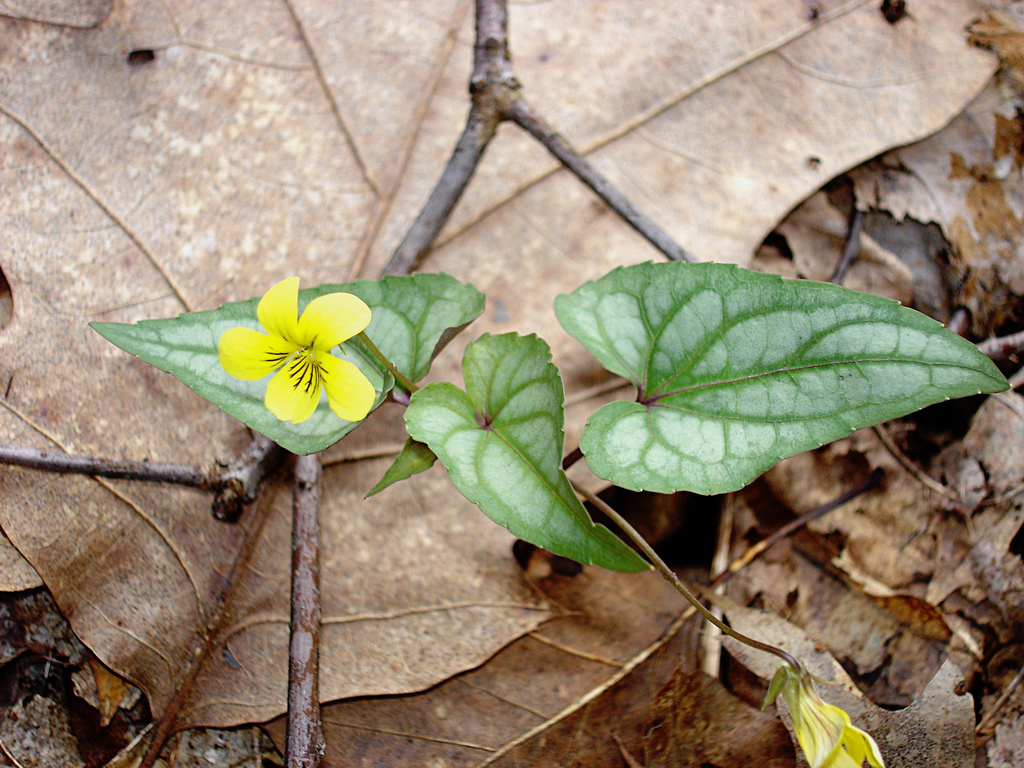
Photo: Viola hastata, Tom Ward

In the Mid Atlantic region violets can be found in most habitats, from the dry shale barrens of the Appalachians to the marshy areas of the coastal plain.  The yellow violets are typically found growing in moist soils often along stream banks and river plains.  Bloom time depends on location, but it can be safely said that from late March into mid May is the time to keep your eyes peeled for these beautiful flowers.

Viola rotundifolia (Round-leaved Yellow Violet)

Photo: Viola rotundifolia, Blue Ridge Kitties

Viola rotundifolia is one of the most common and the smallest of our of the yellow violets.  This is the only yellow violet in the east where the flower and the leaves grow on separate stems.  In botanical terms this is referred to as the flower being unstemmed or acaulescent.  

Photo: Viola rotundifolia, Blue Ridge Kitties

The range of the Round-leaved Violet in the United States is from Maine south into Pennsylavania and New Jersey.  South of PA and NJ the plant is typically restricted to the Appalachian Mountains with scattered populations reaching into the piedmont.  In the Mid Atlantic region there a only a few populations that touch the coastal plain north of the Mason-Dixon line.

Map of Viola rotundifolia, USDA Plant Database

Identification of the Round-leaved Yellow Violet is very easy.  As stated above, this is the only unstemmed yellow violet in the east.  This, along with the small size and rounded leaves makes for an easy id.

Photo: Viola routndifolia, Jason Hollinger

Viola pubescens (Downy Yellow Violet/Smooth-leaved Yellow Violet)

Photo: Viola pubescens, Pearl Pirie

The Downy Yellow Violet is another common yellow violet that grows throughout the Mid Atlantic region. The current taxonomy of Viola pubescens is somewhat muddy.  Viola pensylvanica used to be a species called Smooth-leaved Yellow Violet. These plants were discovered to produced hybrids with Viola pubescens when there were populations of both species present in the same area.  This hybridization caused some concern over the validity of the Viola pensylvanica, which resulted in the species being lumped into Viola pubescens.  The end result is that there are two varieties of Viola pubescens: Viola pubescens var. pubescens and Viola pubescens var. scabriuscula. Fortunately, it is not difficult to tell the two varieties apart and it is still very easy to differentiate either of Viola pubescens varieties from all the other yellow violet species in our region.

Photo: Viola pubescens var. pubescens, Nicholas T.

Viola pubescens var. pubescens can be identified by the hairiness of the plant's stem and leaves.  Unlike the Round-leaved Yellow Violet, Viola pubescens is stemmed, meaning that the leaves and flower share the same stem.  Along with being hairy, the leaves of the Downy Yellow Violet are heart-shaped or cordate.  The photograph below is an example of a cordate shaped leaf.

Photo: cordate shaped leaf, Zen Sutherland

Viola pubescens var. scariuscula is virtually identical to Viola pubescens var. pubescens except that the top of the leaves of var. scariuscula are not hairy but smooth. 

Photo: Viola pubescens var. scariuscula, Dan Mullen

This is the only yellow violet in our area that regularly grows on the coastal plain.  It is found throughout all the states of our region except the coastal plain of North Carolina and the southern portion of the Delmarva Peninsula.  Below are two maps from the USDA Plant Database that show the state ranges of the two varieties of Viola pubescens.

Map of Viola pubescens var. pubescens, USDA Plant Database

Map of Viola pubescens var. scariuscula, USDA Plant Database

Viola hastata (Halberd-leaved Violet)

Photo: Viola hastata, Jason Hollinger

Viola hastata is not as common as the previous two species.  This stemmed yellow violet is easily recognized by it halberd shaped leaves.

Photo: Viola hastata, SWG101

While the leaves are still considered cordate, they are much longer and pointer than the previously mentioned violets.  The leaves of Viola hastata can also have silvery mottling like in the above photo.  The yellow flowers of the Halberd-leaved Violet usually have a purplish wash to the back of the top petals.

Photo: Viola hastata, Jason Hollinger

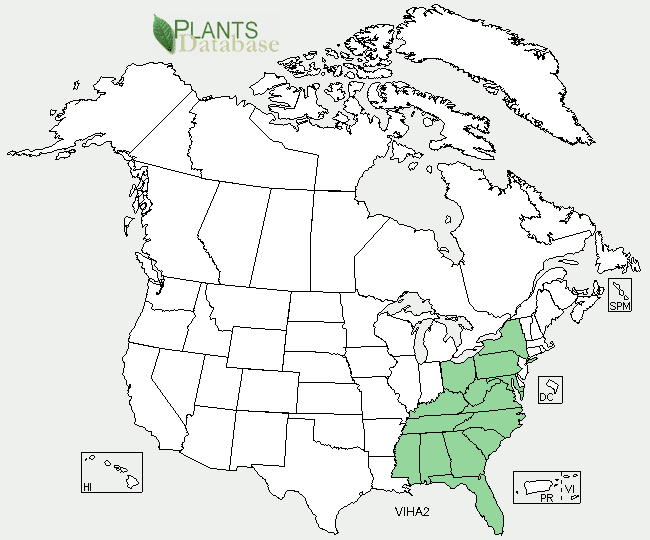
Viola hastata is almost completely restricted to the Appalachian Mountains except in northwestern Pennsylvania and southwestern New York and it also grows in the piedmont of North Carolina.

Map of Viola hastata, USDA Plant Database

Viola tripartita (Three-parted Violet)

The Three-parted Violet is the rarest of the Mid Atlantic regions four species of yellow violets.  One of the reasons for the plants rarity might be because it is difficult to identify because of the variability of the plants leaves.  I could only get one photo of Viola tripartita to use in the blog, so I am going to give links to various websites to help give examples of the plants structure.

Photo: Viola tripartita, William Tanneberger

Viola tripartita at first glance closely resembles Viola hastata.  There is one major difference between the two species.  Viola hastata's leaves are always cordate, while Viola tripartita's leaves are always cuneate (wedge-shaped).  On the website Alabama Plants, there is a photo showing the cuneate leaves of the Three-parted Violet.  It can be seen here ALABAMA PLANTS.  So if you find a yellow violet with halberd shaped leaves make sure you check tthe base of a leaf to see if the leaf is cuneate or cordate.  This will give you the correct identity of the flower.  Another website that gives more information on this species is Native and Naturalized Plants of the Carolinas & Georgia.  There are more photos and some more technical info on Viola tripartita.  It can be viewed here Plants of the Carolinas & Georgia.  There seems to be two varieties of Viola tripartita, although there seems to be no consensus among botanists.  The two varieties are separated by leaf structure.  Viola tripartita var. glaberrima has cuneate leaves like we have discussed above and seems to be the more common variety in the Mid Atlatnic region.  Viola tripartita var. tripartita has deeply divided leaves typically in three lobes.  Var. tripartita seems to be the less common of the two varieties.  More information and a photo of the leaves of Viola tripartita var. tripartita can be viewed at the website Wildflowers of the United States.  It can be viewed here Wildflowers of the United States.

Map of Viola tripartita, USDA Plant Database

Viola tripartita seems to be extremely local throughout its range and seems to become increasingly rare in the northern portions of its range.  In the Mid Atlantic it is found exclusively in Appalachian Mountains except for populations that grow in the piedmont of North Carolina.  Since the above map has been published the plant has been found in Virginia and has become extirpated in Pennsylvania.

I would like to thank all the photographers who made this post possible, especially William Tanneberger who supplied the only only photo of the Three-parted Violet. Please go and check out their photo sites.


Maps were provided by the USDA Plant Database -- http://plants.usda.gov/java/
County level maps are available for all species at the Biota of North America -- http://www.bonap.org/

There doesn't seem to be any books that have been published in the past 20 tears that are exclusive to the wild violets of North America.  If anyone knows of any books that I might have overlooked please let us know by putting the title and brief description in the comments section.


Sunday, April 22, 2012

The Coppers (Lycaena) of the Mid Atlantic Region

One of my favorite families of butterflies are the Coppers.  Coppers belong to the family Lycaena.  They are a world wide family with sixteen species represented in the United States.  The Mid Atlantic region has three representatives of the family;  American Cooper, Bronze Copper, and Bog Copper. Coppers are not terribly common in our region, but with an understanding of habitat it's not that difficult to find all three species.

American Cooper (Lycaena phlaeas)

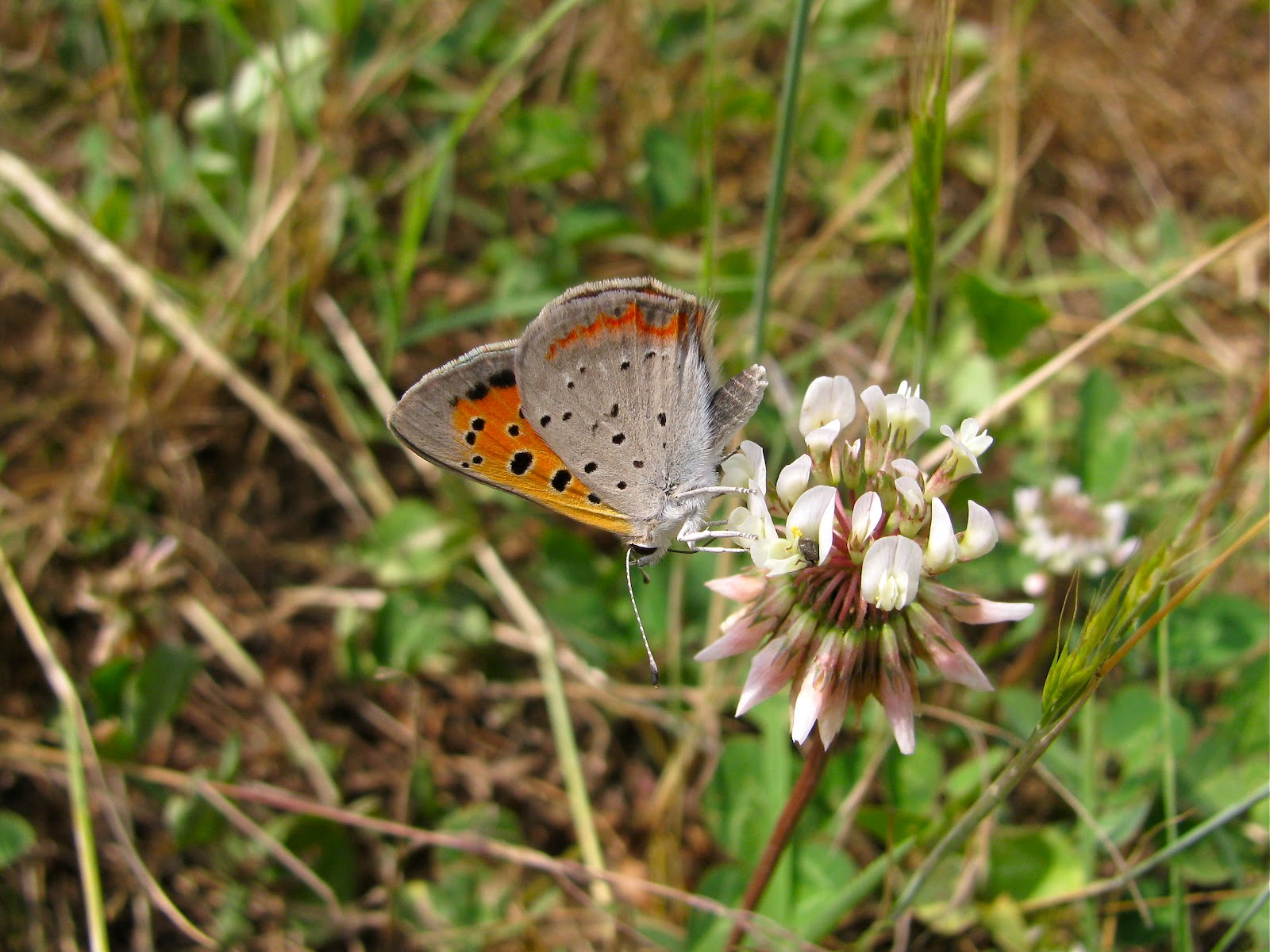
Photo: American Copper, Jim Brighton

American Copper is the most common of the three copper species in the Mid Atlantic region.  They are well represented throughout the region.  From New York to Virginia and West Virginia they are found through out, but in North Carolina they seem to be absent from the coastal plain.  American Coppers are often found in disturbed areas like road sides, fields, and barren areas.

Photo: American Copper, Jim Brighton

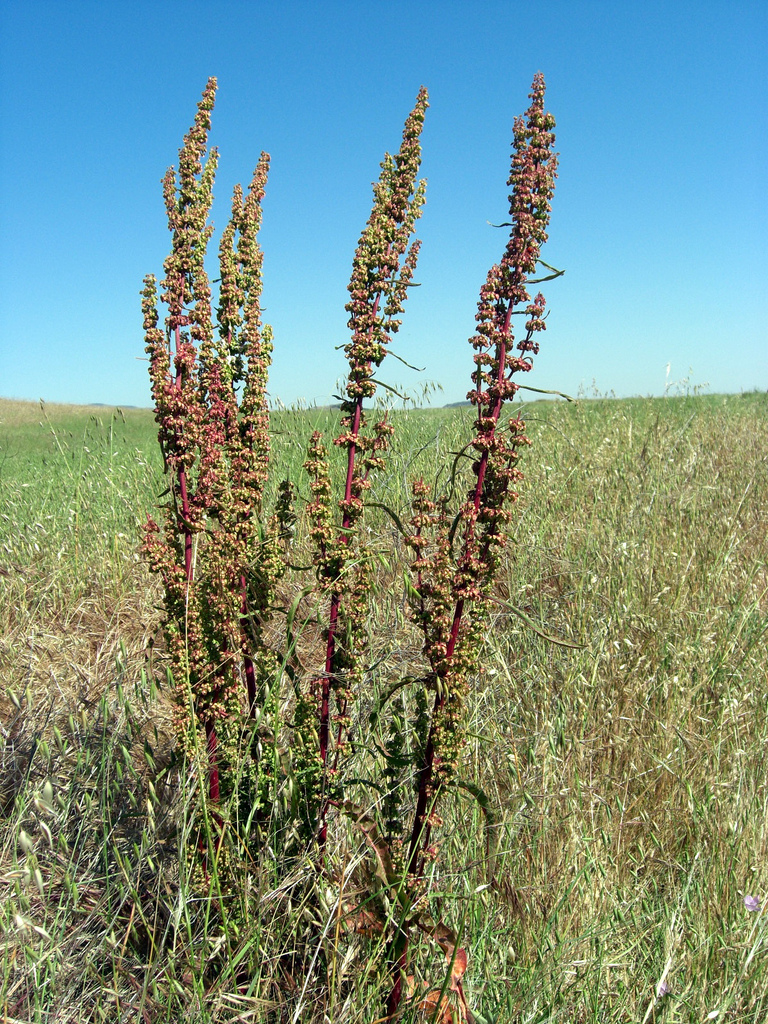
Strangely, the American Copper's hostplants are non-native buckwheats like Sheep Sorrel and Curled Dock.  A hostplant is the type of plant that a butterfly species will lay her eggs on.  Once the eggs hatch into caterpillars, the caterpillars use the hostplant as food. Some experts feel that since the hostplants of the species are not native that it is possible this butterfly was an early colonizer that came from Europe with early settlers (American Copper is found throughout Europe and Asia).  Other scientist's disagree, and point out that other butterfly species have changed their hostplants to alien species and argue that there isn't enough supportive evidence to prove the theory.  Below are photos of Sheep Sorrel and Curly Dock, the most common hostplant of American Copper.

Photo: Sheep Sorrel, Moosicorn

Photo: Curly Dock, Roy Randall

Photo: American Copper, Jim Brighton

Bronze Copper (Lycaena hyllus)

Bronze Coppers are much larger than American Coppers and they are typically found in different environments.  Bronze Coppers prefer moist to wet weedy meadows, pond and ditches with tall grassy edges, and freshwater marsh edges. 

Photo: Bronze Copper, Jim Brighton

Unfortunately, Bronze Coppers have been disappearing from many of their known locations.  Disturbance and destruction of much of their habitat in the east is definitely one of the reasons this beautiful butterfly is becoming scarce.  In the Mid Atlantic region they are found from New York, south through to Maryland and West Virginia.  Although I believe there are records for Virginia, I don't believe there are any extant populations.  In the Butterflies and Moths of North American website they only have two records for Virginia, one on the Eastern Shore and one near Manassas.  Bronze Copper has not been recorded in North Carolina.

Photo: Bronze Copper, Eric Haley

Like the American Copper, Bronze Copper also uses docks as hostplants.  Our native Water Dock is the preferred hostplant, but Curly Dock and knotweeds have also been reported as hostplants.

Photo, Water Dock, Phillip Merritt

The Bronze Copper is considered endangered in New Jersey and is threatened in West Virginia. I know of a few populations in Queen Anne's County and Dorchester County, Maryland.  They seem to be doing quite well over the five years that I have been checking on them.

Photo: Bronze Copper's mating, J. Ward

Bog Copper (Lycaena epixanthe)


Bog Copper is by far the rarest of the Mid Atlantic regions coppers.  Bog Coppers are only found in acidic bogs that have cranberries.  Maryland and West Virginia have a disjunct population that is separated from the population that lives from New Jersey north into New England.

Photo: Bog Copper, Bill Boughton

Bog Coppers are smaller coppers that spend the entirety of their lifespan in the same bog where they were born as caterpillars.  They are very weak fliers and spend much of their lives sitting on their hostplant.  Their flight season in the southern portion of their range is in late June and early July while farther north they can fly into August.

  Photo: Bog Copper, Bill Boughton

The hostplant for Bog Coppers is cranberry.  In the southern portion of the copper's range the species of cranberry is Vaccinium microcarpa (Large Cranberry) and in the north it is Vaccinium oxycoccos (Small Cranberry). 

Photo: Large Cranberry, In Awe of God's Creation

Because acidic bogs with cranberries are rare in Maryland, I only know of one population.  Thankfully, the bog is protected, so hopefully this population of Bog Copper will continue to thrive.  New Jersey seems to be a good place to view Bog Coppers because of the many abandoned cranberry bogs where they used to harvest the berries for commercial use.  Bog Coppers are considered endangered in Maryland and West Virginia and it is listed in Pennsylvania as vulnerable.

Photo: Bog Copper's mating, Jim Brighton


I would like to thank the photographers who made this post possible.

Bill Bouton  http://www.flickr.com/photos/billbouton/
Eric Haley http://www.flickr.com/photos/38686613@N08/
Jane Ward http://www.flickr.com/photos/walkwithme2/
Moosicorn Ranch http://www.flickr.com/photos/moosicorn/
Roy Randall http://www.flickr.com/photos/zeroy/
Phillip Merritt http://www.flickr.com/photos/phillipmerritt/
In Awe of God's Creations http://www.flickr.com/photos/nhoulihan/

Some books that might be of interest to those who might want to pursue butterflies of the Mid Atlantic region.

Butterflies of the East Coast: An Observer's Guide. Cech and Tudor.
http://www.amazon.com/Butterflies-East-Coast-Observers-Guide/dp/0691090564/ref=sr_1_1?ie=UTF8&qid=1335138392&sr=8-1

Butterflies through Binoculars: The East A Field Guide to The Butterflies of Eastern North America. Glassberg
http://www.amazon.com/Butterflies-through-Binoculars-Eastern-America/dp/0195106687/ref=sr_1_2?ie=UTF8&qid=1335138469&sr=8-2

Butterflies of North America. Kaufman and Brock.
http://www.amazon.com/Butterflies-North-America-Kaufman-Guides/dp/0618768262/ref=sr_1_1?ie=UTF8&qid=1335138560&sr=8-1

Here are a couple websites that pertain to butterflies of our region

Butterflies of America http://www.butterfliesofamerica.com/index.htm
Butterflies and Moths of North America http://www.butterfliesandmoths.org/
Rick Borchelt's Butterfly Blog is awesome. Use Rick's long list of resources.  Hours of fun can be had here. http://leplog.wordpress.com/